
 Български

How to Choose an Electronic Scoreboard for a Sports Hall
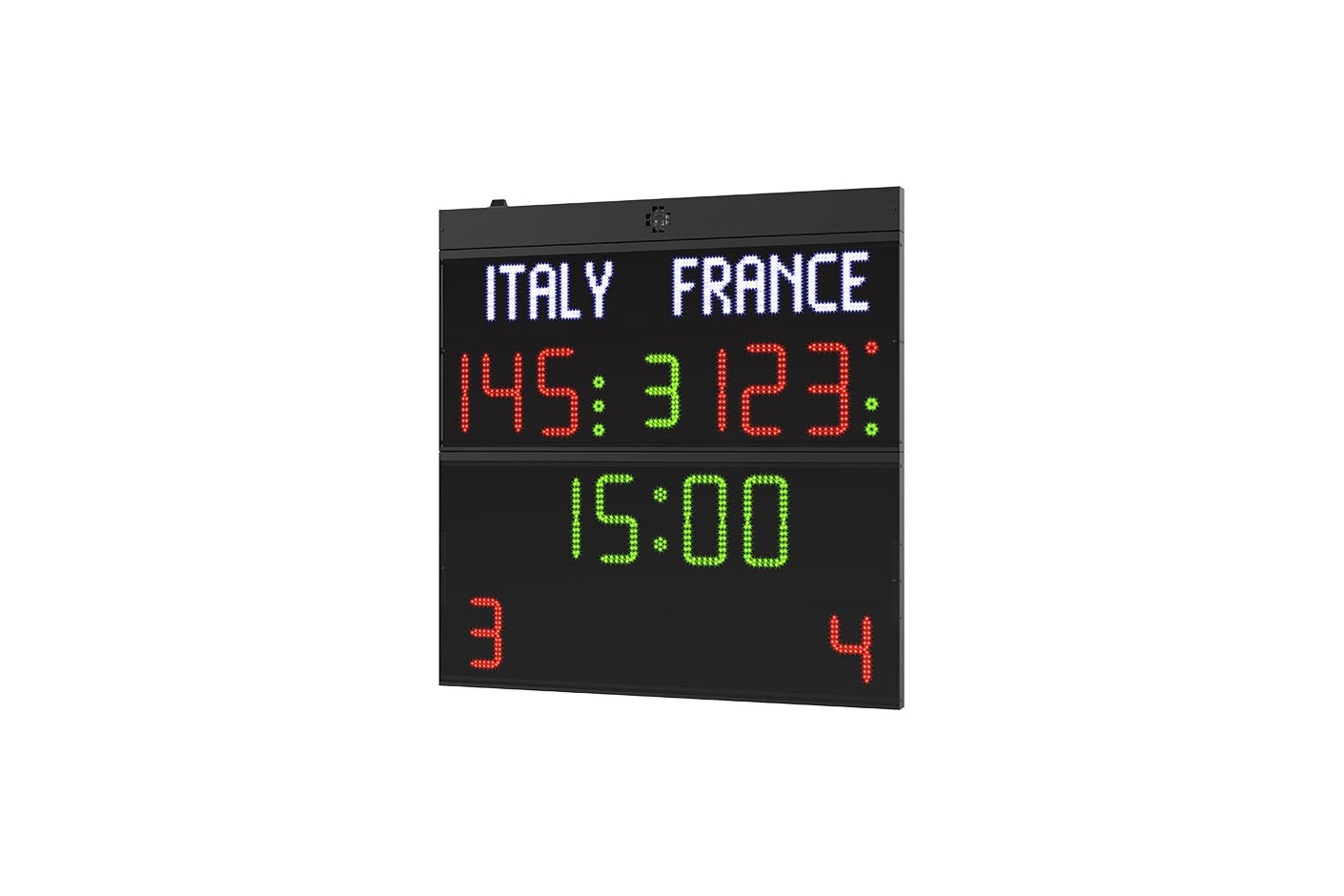
An electronic scoreboard is an important part of the equipment in any modern sports hall. It provides players, officials and spectators with essential information about the progress of a game and should remain clearly visible from different areas of the sports facility.
Choosing an electronic scoreboard involves more than simply comparing its dimensions and price. The type of sport, viewing distance, digit size, information to be displayed, control system and installation location are among the main factors that should be determined in advance.
1. Determine Which Sports the Scoreboard Will Be Used For
Different sports require different information to be displayed. In basketball, for example, in addition to the score and game time, it may be necessary to display the period, team fouls, time-outs and other information related to the game.
Volleyball, handball and other sports have different requirements. When a sports hall is used for several disciplines, a multifunctional electronic scoreboard that can be configured according to the particular sport is usually the appropriate solution.
2. Match the Dimensions to the Viewing Distance
The overall dimensions of the scoreboard and the height of its digits should correspond to the size of the sports hall. Essential information should be easy to read not only from the playing area but also from the spectator seating.
Larger sports facilities require larger numerical displays that remain clearly visible over considerable distances. In smaller school or training halls, an excessively large scoreboard may provide little practical benefit while unnecessarily increasing the investment.
3. Determine What Information Needs to Be Displayed
Before selecting a particular model, it is useful to prepare a list of the information that needs to be displayed. Basic information normally includes the score, game time and period or stage of the match, while additional indicators may be required depending on the sport.
This is particularly important in multipurpose sports halls. The scoreboard should provide the functions required for the sports that will actually be played in the facility without making the system unnecessarily complicated with features that will never be used.
4. Consider the Control System
The scoreboard control system should be convenient and easy for operators to use. During a sporting event, the score, time and other information must be updated quickly without complicated sequences of commands.
Depending on the particular system, control may be provided through a dedicated control console or another purpose-designed device. A clear operating interface and reliable communication with the scoreboard are essential.
5. Plan the Correct Installation Location
The location of the scoreboard directly affects its visibility. It should be positioned so that the essential information can be viewed without obstruction by players, officials and spectators.
The structure of the hall, spectator stands, lighting, windows and other sports equipment should all be considered when selecting the installation position. Proper planning reduces the risk of structural elements obstructing the view of the scoreboard.
6. Plan the Power Supply and Communication
The necessary electrical and communication connections should ideally be considered during the design or preparation of the sports hall. This allows cables and other components to be arranged appropriately and avoids the need for inconvenient solutions at a later stage.
In existing sports facilities, it is important to determine in advance how the scoreboard will be powered and how communication between the scoreboard and its control system will be established.
7. Consider Long-Term Operation
An electronic sports scoreboard is normally expected to remain in service for many years. The selection process should therefore consider not only its initial functionality but also the possibilities for servicing, maintenance and replacement of individual components when required.
Quality construction, reliable electronics and proper installation contribute to a longer service life and reduce the likelihood of technical problems during sporting events.
Conclusion
The appropriate electronic scoreboard should be selected according to the sports being played, the dimensions of the hall, the information that needs to be displayed and the required viewing distance. The control system, installation position and technical infrastructure should also be considered before installation.
NENOV SPORT provides electronic sports scoreboards for school and professional sports halls, with configurations that can be adapted to the purpose and specific requirements of the sports facility.